The universe as we have discovered it from cutting-edge contemporary science—especially when exploring the vast cosmic reaches of space and time via the Hubble (launched 1990 by NASA and “hungry to capture the most intimate images of the cosmos”1) or James Webb (launched Christmas Day, 2021) space telescopes—while hugely important, is almost unimaginable. Process philosopher and theologian, and longtime Dean (from 1945–1954) of the University of Chicago Divinity School, Bernard M. Loomer (1912–1985), adds a touch of aesthetic flair when he suggests the evolution of our planetary life
is not only a fantastic tale of the incredible and cunning creativity of life’s powers exhibited over vast stretches of time; it is equally an awesome and humbling story of the ‘enormous in terlinked complexity of life’ as Loren Eiseley made the point by citing the poet Francis Thompson ‘One could not pluck a flower without troubling a star’.1
Unimaginable… as in there isn’t just one other galaxy besides our own Milky Way, or just a handful more, but at least 100 billion, each containing at least 100 billion stars! Unimaginable… as in black holes, colliding galaxies, ghostly galactic structures, and a dusty supernova remnant, all of which reveal the universe is a restlessly chaotic place, constantly changing its face! “While conveying essential precision and depth to other scientists”,1 all such levels of scientific and technological observations are remote, couched in language which is complex and inaccessible, generally speaking.2 And where scientists themselves have often been overwhelmed by their discoveries, finding them difficult “to explain in other than scientific equations and mathematical description.”1 Thus the problem: such language and presentations fail to capture both our imaginations or our feelings “to the necessary level of awe and wonder”
This is the introduction for a talk by Rev A E Rex Hunt on the topic of mysticism and how we might understand the wonders of the world. This talk can be read by clicking here.
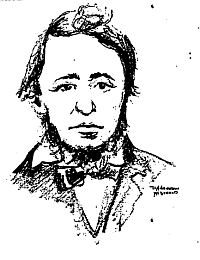 Then there were huckleberrying parties. These were under the guidance of Thoreau, because he alone knew the precise locality of every variety of the berry. I recall an occasion when little Edward Emerson, carrying a basket of fine huckleberries, had a fall and spilt them all. Great was his distress, and our offers of berries could not console him for the loss of those gathered by himself. But Thoreau came, put his arm around the troubled child, and explained to him that if the crop of huckleberries was to continue it was necessary that some should be scattered. Nature had provided that little boys should now and then stumble and sow the berries. We shall have a grand lot of bushes and berries in this spot, and we shall owe them to you. Edward began to smile.”